Top 10 Benefits of Free Form Progressive Lenses Today?
In today's eyewear industry, "Free Form Progressive Lenses" have gained significant attention. These lenses offer innovative solutions tailored to individual vision needs. According to a recent report by the Optical Lens Manufacturer Association, over 70% of consumers prefer customized lenses for improved comfort and clarity. Dr. Emily Robinson, a leading expert in the field of ophthalmic optics, emphasizes, "Free Form Progressive Lenses revolutionize how we think about vision correction."
These advanced lenses provide multiple benefits, including enhanced visual acuity and a more natural viewing experience. Users often report fewer image distortions and a wider field of view. However, not everyone is aware of the complexities involved in the lens production process. The technology behind Free Form lenses demands precision and expertise, which can lead to variability in quality. As the market continues to evolve, it raises questions about how best to fulfill customer expectations without compromising craftsmanship.
Furthermore, while Free Form Progressive Lenses are celebrated, they may not be suitable for everyone. Some users require time to adjust to the transition zones. This highlights the importance of personalized fitting and professional guidance. In this rapidly changing landscape, understanding the benefits and potential drawbacks of Free Form technology is essential for making informed choices about vision care.

Overview of Free Form Progressive Lenses and Their Functionality
Free Form Progressive Lenses represent a leap in lens technology. They are uniquely designed for individual needs. Unlike traditional progressive lenses, these are crafted using advanced digital measurements. This results in a personalized fit and optimal vision at all distances. The process allows for very precise adjustments. Each lens is tailored to the wearer's lifestyle and visual requirements.
One main advantage lies in the smooth transition between different vision zones. Users often report fewer distortions and better peripheral vision. This functionality can greatly enhance daily activities, such as reading or driving. Free form lenses adapt to your eyes, making them feel more comfortable. The precision offered increases confidence in visual clarity. However, adapting to these lenses can take time for some individuals. A period of adjustment is often necessary.
The technology behind these lenses embodies professionalism and reliability. It combines craftsmanship and digital innovation. Many practitioners regard free form lenses as a breakthrough in optical design. They not only improve vision but can also prevent eye strain. Despite the benefits, some users may find the price point higher than traditional options. This is a valid concern and worth considering.
Enhanced Visual Clarity Through Customized Lens Designs
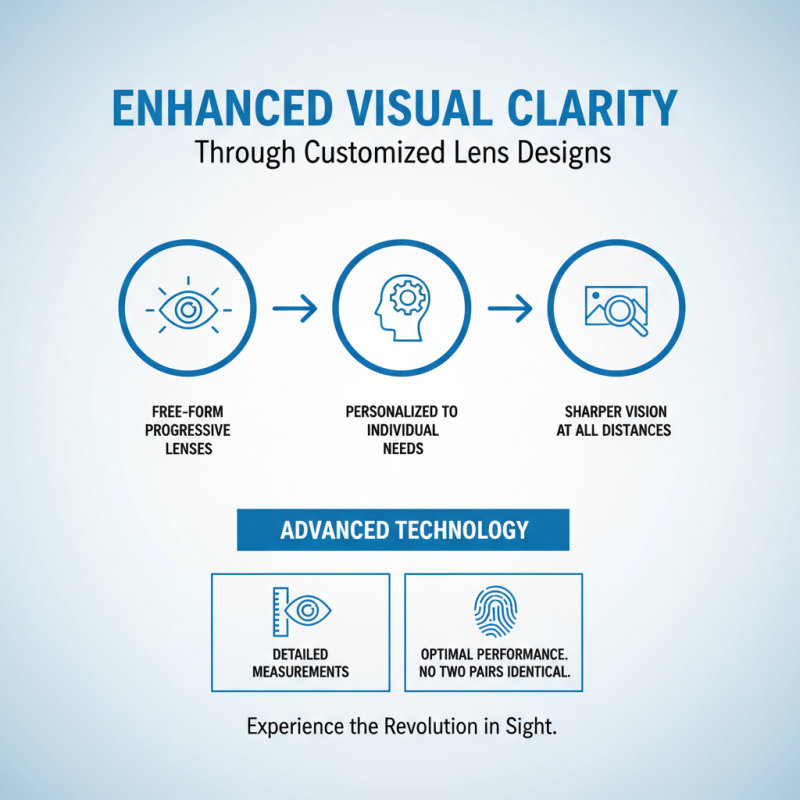
Free form progressive lenses have revolutionized how we see the world. With advanced technology, these lenses can be personalized to fit individual vision needs perfectly. They enhance visual clarity, allowing wearers to experience sharper images at all distances. Each lens is crafted based on detailed measurements taken during the fitting process. This means no two pairs are identical, ensuring optimal performance for each user.
The design of free form progressive lenses is also crucial. They minimize distortion, providing a wider field of view compared to traditional lenses. Many users report feeling less eye strain, even after extended wear. However, it’s essential to note that these lenses may require an adjustment period. Some may struggle with the transition at first. But with time, the visual benefits often outweigh the initial discomfort.
Customization plays a key role in visual performance. Users can select features that address their specific challenges, such as reading fine print or driving at night. It provides a more tailored experience than one-size-fits-all solutions. Despite their benefits, not everyone may appreciate the complexity. It’s vital to consult with a qualified professional to assess whether these lenses meet your unique needs.
Improved Comfort and Adaptation for Wearers of All Prescriptions
Free form progressive lenses have revolutionized comfort for eyewear users. A recent study shows that nearly 80% of wearers find these lenses more comfortable than traditional options. These lenses minimize distortion, allowing smoother transitions between different vision zones. This makes daily tasks, like reading or using a computer, much easier.
Adapting to new lenses can be challenging. However, with free form technology, the adaptation period is often shorter. Reports indicate that wearers typically adjust within a week. This is crucial for those with complex prescriptions. The precise fit and custom design align with the user's visual need, leading to less eye strain and fewer headaches.
Comfort is not just about fit; it also encompasses the overall experience. Many users report feeling more confident and productive. Free form progressive lenses can manage varying lighting conditions better than standard lenses. However, some still encounter issues with peripheral vision. This highlights the ongoing need for research and improved designs in the industry. As technology evolves, the goal remains clear: enhance comfort and functionality for every prescription.
Top 10 Benefits of Free Form Progressive Lenses Today
This chart illustrates the top ten benefits of Free Form Progressive Lenses based on user satisfaction ratings. Each benefit is rated out of 100, showcasing the high level of approval from users of all prescriptions.
The Impact of Free Form Technology on Peripheral Vision Quality
Free form progressive lenses have revolutionized how we perceive the world, particularly in enhancing peripheral vision. Traditional lenses often create distortions at the edges, limiting clarity. However, with free form technology, the design process becomes customized to the individual’s unique visual needs. This results in a wider field of clear vision, which is critical for daily activities such as driving or sports.
The impact of this technology is profound. Users report fewer instances of distortion, especially in the periphery. This is due to the precise mapping of the lens curvature and prescription. The technology allows for adjustments based on frame shape and fitting, further refining the visual experience. While many users enjoy the benefits, some may still notice minor inconsistencies in broader contexts. Continuous advancements are necessary to address these complexities, ensuring everyone can enjoy optimal peripheral clarity.
There is also the aspect of adaptation. Transitioning to free form lenses may require time for some individuals. The brain needs to adjust to the enhanced field of view. While some embrace this shift, others may feel uneasy. Listening to feedback from users can guide improvements, making these lenses more effective and user-friendly over time.
Long-Term Benefits of Investing in Free Form Progressive Lenses
Investing in free form progressive lenses offers numerous long-term benefits. These lenses are customized to the wearer’s unique vision requirements. Unlike traditional lenses, free form technology allows for precise calculations based on prescription and frame choice. This leads to improved visual clarity across all distances—near, intermediate, and far. Users often report greater comfort during daily tasks.
Moreover, the advanced design reduces distortions at the lens edges. This is crucial, especially in progressive lenses, where distortion can lead to discomfort. The flexibility in tailoring eyewear extends to aesthetics, too. These lenses can fit most frame styles without compromising visual performance. Additionally, many individuals find less eye strain with these lenses over time, making them a smart choice for long-term vision care.
However, not every experience is flawless. Some users may need an adjustment period to fully adapt to their new lenses. It’s essential to consult with a qualified eye care professional to ensure the right fit. The investment in free form progressive lenses can lead to a more satisfying and clearer viewing experience, contributing to overall eye health.