What is Glasses Lens Index and How Does It Affect Vision?
The concept of "Glasses Lens Index" plays a crucial role in understanding how lenses can improve vision. Different lens indices relate to the thickness and weight of glasses, impacting comfort and style. Higher indices tend to be thinner and lighter, appealing to many users. However, this does not mean higher is always better.
Choosing the right index involves personal preferences and needs. Some may prioritize aesthetics, while others focus on durability and affordability. A higher index can bring a sleek appearance, but it may also come with a heftier price tag.
It’s essential to reflect on what truly matters for your vision. Are you looking for the most fashionable option, or do you value functionality more? Understanding your vision requirements can help in making an informed decision about the right "Glasses Lens Index.
Understanding the Concept of Lens Index in Eyewear
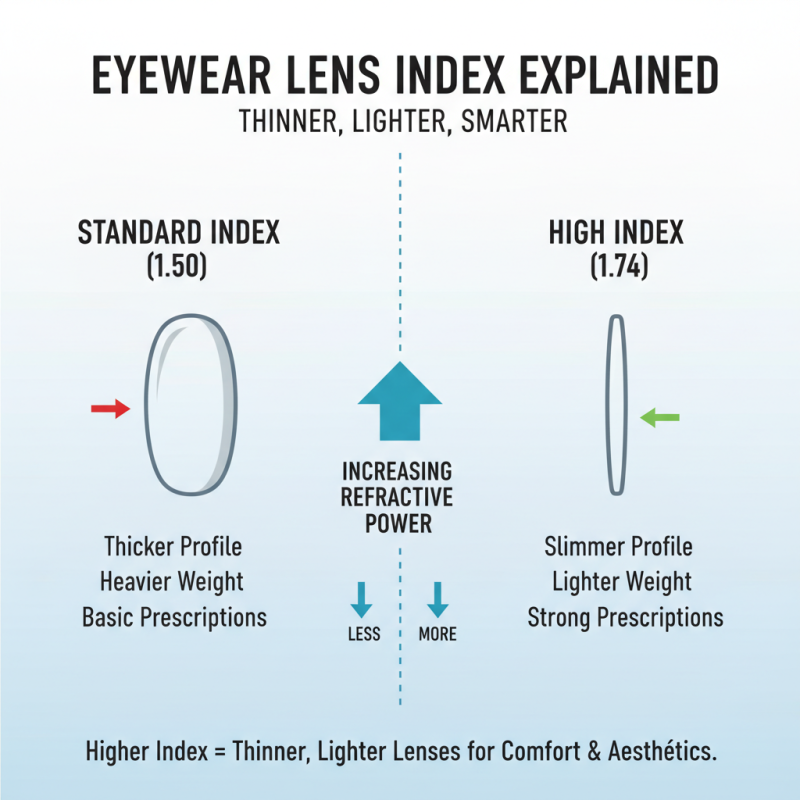
Understanding the concept of lens index in eyewear is critical for anyone considering glasses. The lens index measures the material's refractive power. Higher indices result in thinner and lighter lenses. For example, a lens with an index of 1.74 will be slimmer than one with an index of 1.50. This can significantly affect comfort and appearance.
When choosing lenses, consider your prescription strength. Higher prescriptions may benefit from a high-index lens. They reduce thickness and weight, making glasses more wearable. However, they can also be more expensive. It’s essential to weigh these factors. Sometimes, less expensive options may suffice for your needs.
Tips: Always try on different frames and lens types before purchasing. This helps you understand what feels best. It's also wise to consult with an eye care professional. They can guide you based on your unique vision requirements. Ensure you prioritize your comfort over trends. Remember, not all high-index lenses are equal; research is important.
The Different Types of Lens Indexes: A Comprehensive Overview
Glasses lens index refers to the refractive index of the lens material. This index determines how well the lenses bend light. Higher index lenses are thinner and lighter, offering distinct advantages for those with strong prescriptions.
There are several types of lens indexes. Standard lenses generally have a refractive index of around 1.50. These are thicker and not very attractive for fashion-conscious wearers. Mid-index lenses, like 1.60, offer a better option. They are slimmer and lighter than standard ones. High-index lenses, such as 1.74, are an excellent choice for strong prescriptions. However, they can be more expensive and may distort peripheral vision.
Choosing the right lens index impacts both comfort and style. A thicker lens can feel heavy on the nose. It may also cause discomfort during long wear. Conversely, higher index lenses, while advantageous, often require careful consideration of frame compatibility. Some frames do not support the added thickness of high-index lenses. Make sure to think it through. The ideal choice balances vision correction and personal aesthetic.
How Lens Index Impacts Thickness and Weight of Glasses
The lens index is crucial in determining how thick or thin glasses will be. Higher index lenses bend light more efficiently. This means they can be made thinner while maintaining the same corrective power. For example, a lens with an index of 1.74 is significantly thinner than a 1.5 index lens for the same prescription. This offers benefits for aesthetic appeal and overall comfort.
Thickness matters, especially for those with strong prescriptions. A higher index means lighter glasses. According to industry research, high-index lenses can reduce weight by more than 30%. Lighter glasses are less likely to slide down your nose. They also minimize pressure points, enhancing comfort. However, higher index lenses often come with a higher cost.
Not all high-index lenses are ideal for every wearer. Some may find the reduced thickness leads to unwanted distortions. Vision experts suggest that not every lens index suits every prescription. Personal preferences in style and comfort should guide choices. Balancing thickness and weight is essential. Choosing the right lens index can be crucial for an enjoyable vision experience.
What is Glasses Lens Index and How Does It Affect Vision?
| Lens Index |
Material |
Weight (grams) |
Thickness (mm) |
Recommended Prescription Range |
| 1.50 |
CR-39 |
15 |
3.0 |
-2.00 to +2.00 |
| 1.56 |
Polycarbonate |
11 |
2.6 |
-4.00 to +4.00 |
| 1.61 |
High Index Plastic |
9 |
2.0 |
-6.00 to +6.00 |
| 1.67 |
High Index Glass |
8 |
1.8 |
-8.00 to +8.00 |
| 1.74 |
Ultra High Index Plastic |
7 |
1.6 |
-10.00 and above |
The Role of Lens Index in Vision Correction and Clarity
The lens index plays a crucial role in vision correction. It refers to the refractive index of the lens material. A higher index means thinner and lighter lenses. For people with strong prescriptions, this can make a significant difference.
Thinner lenses provide better comfort and aesthetic appeal.
However,
higher index lenses can sometimes lead to
optical distortions. Users may notice changes in
peripheral vision. It's essential to
test different indices to find the right balance. Some may prefer
thicker lenses for better clarity. The choice often depends on
personal comfort and visual needs.
In vision correction,
clarity matters most. Higher index lenses can improve vision but might not suit everyone. Each person's experience is different. Factors like
frame choice and
face shape come into play. Ultimately, it’s about finding the right lens that fits both
vision and
lifestyle.
Choosing the Right Lens Index for Optimal Visual Comfort
Choosing the right lens index is crucial for optimal visual comfort. Lens index refers to the thickness and curvature of lenses. Higher index lenses are thinner and lighter, which many prefer. People with strong prescriptions, like -6.00 or +4.00, often find thinner lenses more comfortable.
According to the Vision Council, nearly 70% of spectacle wearers experience discomfort with thick lenses. High-index lenses reduce this problem, making them a popular choice. However, not everyone is aware that these lenses can create distortions, especially at the edges. Some may notice a fishbowl effect, which can be disorienting.
Understanding your prescription helps in selecting the right index. A lower index, like 1.50, is affordable but might feel bulkier. For those with less sensitivity to optical distortions, this could be fine. In contrast, a 1.74 index is sharper but might be an unnecessary expense for some. During lens selection, personal comfort should always be front and center, alongside clarity and aesthetics.