Choosing Free Form Single Vision Lenses in 2026 requires more than selecting the newest coating or the lowest advertised price. These lenses use digital surfacing to shape the prescription across the lens surface. That process can improve clarity, edge performance, and prescription accuracy. However, results depend on more than software.
Dr. Mark Wilkinson, a respected optometrist and vision-science educator, offers a practical principle: “Accurate measurements matter more than marketing claims.” That advice deserves attention. A precise refraction, reliable pupillary distance, fitting height, frame position, and wearing habits all influence the final result. A lens optimized for a small, stable frame may not perform similarly in a large, curved frame. Tiny fitting errors can become noticeable during reading, driving, or extended screen use.
This guide explains how to compare Free Form Single Vision Lenses for real daily needs. It examines lens design, material, coatings, digital measurements, laboratory quality, and after-sales support. It also considers how opticians verify the finished lenses before delivery. Look closely.
The most expensive option is not automatically the best choice. A budget lens may suit a simple prescription and a carefully fitted frame. Still, individual prescriptions can behave unpredictably at the edges. That is where this topic becomes less straightforward. Personal experience, professional measurements, and manufacturer data should work together. Even then, no lens decision is perfectly universal. Your visual habits may reveal needs that a product brochure overlooks.
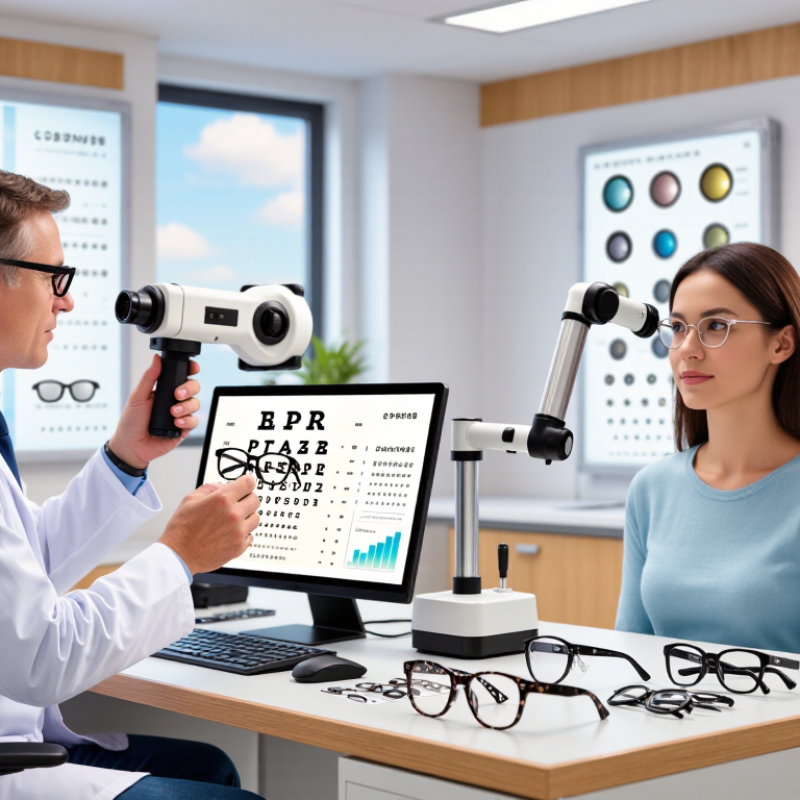
Define the prescription and fitting data before selecting a freeform design. Your written prescription should include sphere, cylinder, axis, and prism values when prescribed. For near-focused tasks, record the working distance as well. It can change the final lens performance.
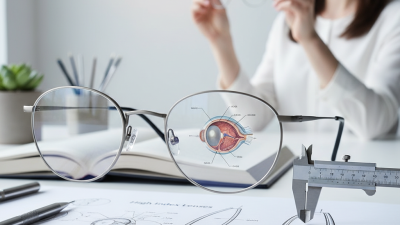
Accurate fitting data matters just as much. Measure monocular pupillary distance for each eye, not only total PD. Record fitting heights from the pupil center to the deepest frame position. Frame wrap, pantoscopic angle, vertex distance, bridge position, and lens shape also affect the design. Small errors may produce noticeable blur near the edges. I have seen a comfortable frame perform poorly after height measurements were copied incorrectly.
Use the patient’s real visual habits. A person reading at a desk may need different optimization than someone driving frequently. Ask about screen distance, head movement, and common viewing zones. Recheck measurements after the frame is adjusted on the face. Frames can sit higher, lower, or more tilted than expected. No measurement is perfect. Still, careful records improve reliability. Lens verification should compare the finished product with the prescription and fitting data. That step is often skipped. It should not be. Record unusual needs, confirm the final frame position, and explain that freeform precision depends on both digital calculations and practical fitting.
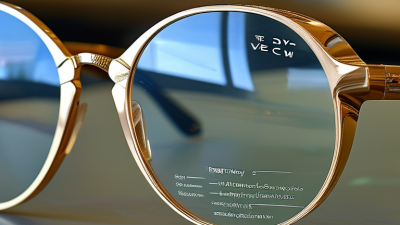
Free form single vision lenses should match your prescription, frame, and daily habits. Lens index is only one part of the decision. For low prescriptions, standard index materials may provide comfortable thickness and a higher Abbe value. Higher prescriptions often benefit from a higher index, which can reduce edge or center thickness. However, high-index materials may weigh less but sometimes show more chromatic blur. The difference can be noticeable around bright lights.
Frame size also changes the result. A large frame can make powerful lenses look thicker, even with a high index. Smaller frames may reduce thickness and weight more effectively. Free form digital surfacing can improve power placement across the lens, but it cannot correct every fitting mistake. Accurate pupillary distance, fitting height, and frame adjustment still matter. A useful lesson is simple: index alone does not solve everything.
Tips: Ask an optician to compare two index options using your exact prescription and frame measurements. Check the lens thickness, estimated weight, and Abbe value together. If you have strong power, discuss edge thickness and visual comfort before ordering. Try not to choose only by the thinnest appearance. Daily screen use, driving, and sensitivity to color fringes deserve attention too. Bring your prescription details. Small measurement errors can become visible.
Freeform single vision lenses should begin with accurate wearing measurements. Set the vertex distance between 12 and 14 mm. Keep pantoscopic tilt between 8 and 10 degrees. These values often match normal frame positioning, but they are not universal prescriptions. A narrow bridge, deep frame, or unusually curved front can change the result. ISO 21987:2017 identifies individual wearing parameters as important in customized ophthalmic lenses. Even a small measurement error can affect peripheral clarity. For a +10.00 diopter lens, moving the vertex distance from 12 to 14 mm changes effective power by roughly 0.27 diopters, based on the standard vergence formula. That difference is noticeable.
Tilt also changes the lens’ effective optics. At 8–10 degrees, freeform calculations can compensate for oblique viewing angles more accurately. The American National Standards Institute’s Z80.1 lens standards reinforce the need for controlled power and fitting accuracy. However, standards do not replace clinical judgment. I still recheck the frame after adjustment. Real faces are not perfectly symmetrical. That detail is easy to forget.
Tips: Measure with the frame adjusted on the wearer’s face, not on a flat table. Record right and left vertex distances separately. Confirm tilt with a digital measuring device when available. Compare the wearer’s posture and usual working distance. If the frame sits higher later, recalculate the design. These are starting points, not magic numbers.
How to Choose Free Form Single Vision Lenses in 2026?
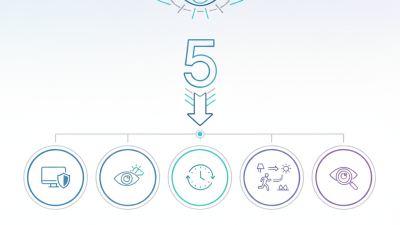
Digital optimization zones are not identical. A distance-centered design may sharpen driving vision, while a broader intermediate zone helps computer work. Personalization uses prescription, frame shape, fitting height, vertex distance, pantoscopic tilt, and working distance. These inputs matter because a lens optimized for a small frame may perform poorly in a large, curved frame. Ask the optician to display the intended viewing zones on a measurement screen. Do not trust a wider diagram alone.
The World Health Organization’s World Report on Vision (2019) estimated that 2.2 billion people had near or distance vision impairment. At least 1 billion cases were preventable or unaddressed. The IAPB Vision Atlas (2021) reports that 1.1 billion people live with preventable or treatable vision loss. Freeform design cannot solve every visual problem. It may improve usable peripheral vision, but results depend on centration, adaptation, binocular balance, and frame stability. A proper comparison should assess acuity, comfort, head movement, and task performance after wear. Real-world gains can be modest. That deserves honesty. If night driving feels clearer but computer text still swims, review the design and measurements. Choose the optimization zone that matches daily tasks, then verify comfort through follow-up wear.
Compare digital optimization zones, personalization, and potential visual-field benefits.
This comparison uses a transparent 0–5 decision framework rather than brand-specific clinical claims. Higher scores indicate greater design flexibility, more wearer-specific inputs, and stronger potential to manage peripheral viewing demands. Actual visual performance depends on prescription, frame fit, lens material, measurements, and adaptation.
Free form design can improve prescription accuracy, but manufacturing style does not prove quality. Before ordering, ask for evidence of ISO 8980-1 and ANSI Z80.1 compliance. ISO 8980-1 defines optical requirements and tolerances for finished spectacle lenses. ANSI Z80.1 provides comparable requirements for prescription lenses in the United States. These standards help assess sphere, cylinder, axis, prism, and surface quality. A polished website is not proof.
Request a recent laboratory report, not only a supplier declaration. Check the tested lens material, prescription range, measurement method, date, and laboratory identity. The report should connect clearly to the production lot. Independent testing adds credibility. In practical dispensing work, small axis or prism errors can become noticeable during fitting. Pupillary distance, fitting height, and frame position still matter. Free form cannot correct inaccurate measurements.
The World Health Organization’s World Report on Vision estimates that at least 2.2 billion people have vision impairment globally. It also identifies at least 1 billion potentially preventable cases. That figure reinforces the need for reliable correction. Still, compliance documents can be incomplete or difficult to interpret. I would question unclear tolerances and missing raw results. Ask whether testing covers the actual lens design, not merely the material. Keep the report with the order record. Recheck the finished lenses before delivery. Small details matter.