How to Choose the Best IoT Lens Designs for Your Projects?
Choosing the right IoT lens designs is crucial for the success of your projects. These lenses impact sensor performance, data accuracy, and overall user experience. With the growing IoT landscape, it’s vital to understand which designs will best fit your needs.
Every project is unique. Some require a wide field of view, while others benefit from a focus on specific areas. Consider the environment where the lenses will be used. Harsh conditions may demand more durable materials. A well-thought-out lens design enhances functionality. Weak choices can lead to failures and wasted resources.
Reflect on your specific applications. Are you monitoring, measuring, or connecting? Each purpose requires different attributes from IoT lens designs. Don’t rush the decision. Assess the trade-offs and potential shortcomings. What works today may not suit your future endeavors. It's important to adapt and innovate continually.
Understanding the Basics of IoT Lens Designs
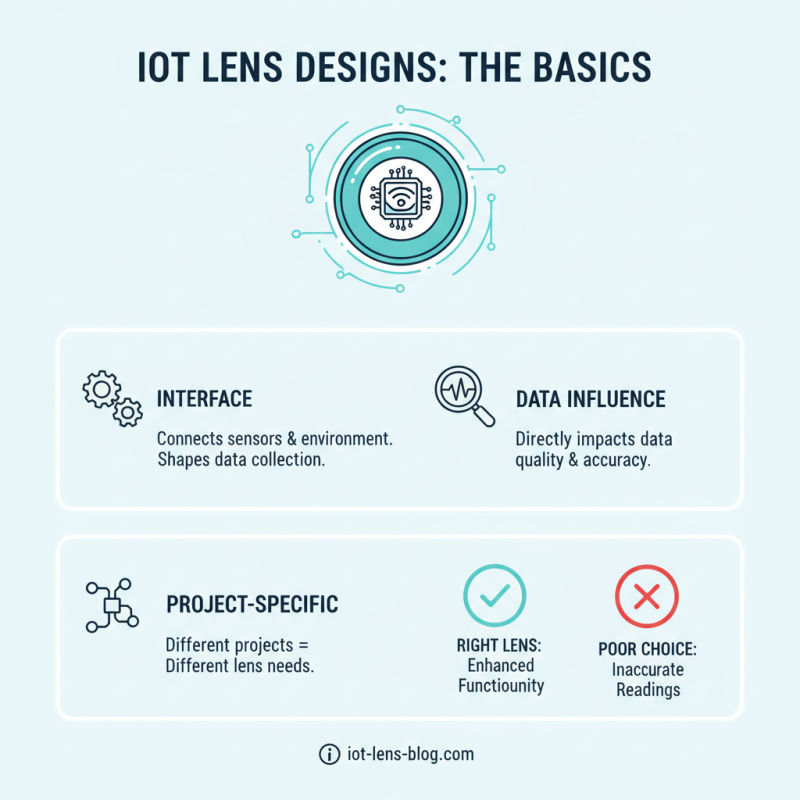
When choosing IoT lens designs, understanding the basics is crucial. IoT lenses act as the interface between sensors and the environment. They influence how data is collected. Different projects may require different designs. The right lens can enhance functionality. Poor choices might lead to inaccurate readings.
Here are some tips. Consider the environment where the IoT device will be operated. Will it face extreme temperatures or moisture? Choosing a lens that can endure such conditions is important. Also, think about the focal length. A lens with the wrong focal distance can blur the data collection. Testing different prototypes can provide insights into the best fit for your needs.
Design is not just about functionality; it also affects aesthetics. A visually appealing lens can increase user engagement. However, overemphasizing style may compromise performance. Strive for a balance between form and function. Document your design choices and their impacts. This reflection helps in future projects and aids in avoiding mistakes.
Key Factors to Consider When Choosing IoT Lens Designs
When selecting IoT lens designs, several factors come into play. The primary concern should be the specific application you have in mind. Are you aiming for indoor or outdoor use? Indoor applications may require different coatings compared to outdoor environments. Consider light transmission and distortion as these can impact sensor performance.
Next, think about the material of the lens. Glass and plastic each have advantages and drawbacks. While glass offers better clarity, it may be heavier and more fragile. Plastic lenses are lightweight but could scratch easily. This trade-off demands careful consideration based on your project's needs. Sometimes, a balance is required between durability and image quality.
Additionally, manufacturing techniques matter. Some designs may include features like anti-reflective coatings. However, these can add to production complexity. Reflect on your budget constraints versus the desired quality of your final product. The interaction between these elements can sometimes lead to unexpected challenges, pushing teams to rethink their choices. Each decision affects the overall outcome, making it crucial to weigh the pros and cons thoughtfully.
Evaluating Material Types for IoT Lens Applications
When selecting materials for IoT lens applications, various factors come into play.
Polycarbonate and acrylic are among the most popular choices.
These materials offer excellent optical clarity and are lightweight. In fact, a report by the Global IoT Lens Market indicates that
polycarbonate lenses are expected to grow at a CAGR of 5.2% through 2025. However, while these materials are durable,
they can be sensitive to scratches and UV exposure.
Another consideration is the application environment. For outdoor IoT devices,
weather-resistant materials, like glass, may be essential.
Glass offers superior scratch resistance and is less prone to yellowing over time. This durability adds to its appeal in rugged settings.
A survey showed that nearly 60% of IoT developers prioritize longevity in their lens designs.
Yet, glass is heavier and more brittle, posing challenges in certain designs.
Reflecting on material choices is crucial. It’s easy to overlook specific requirements. Every project is unique,
and one-size-fits-all solutions rarely apply. Developers should evaluate not just the material properties,
but also how they interact with other components. Choosing the right lens material can ultimately impact
device performance and user satisfaction.
Assessing Optical Performance and Features in IoT Lenses
When choosing IoT lens designs,
optical performance is crucial. A recent report by
MarketsandMarkets
indicated that the global IoT lens market is expected to grow from $5.2 billion in 2023 to
$15.3 billion by 2028. This rapid growth signifies a rising demand for lenses that can
enhance image quality and energy efficiency. Not all lenses meet these performance standards.
An assessment of focal length, aperture size, and resolution is vital.
Wider apertures can gather more light,
but they may introduce aberrations.
Features like anti-reflective coatings can significantly impact performance.
For instance, lenses with these coatings can improve visibility by 30%.
However, some coatings are prone to wear, affecting long-term performance.
Finding a balance between durability and optical quality is essential. It's important to reflect on the
environment where the IoT devices will be used.
High humidity or dust can adversely affect lens performance. Testing lenses in actual conditions is often overlooked,
yet it is crucial for optimal functionality.
Aligning Lens Selection with Project Requirements and Budgets
When selecting lens designs for IoT projects, matching your choices with project needs is crucial. Consider the specific use cases. Different applications require different functionalities. For example, security cameras need wide-angle lenses. Meanwhile, environmental sensors may need more specialized optics. Always start by defining what you need from the lens.
Tips: Check the field of view and depth of focus. Do not overlook the importance of light transmission. Poor light performance can ruin the project.
Budget plays a significant role in lens selection. High-quality optics can be expensive. Sometimes, cheaper options might not meet your standards. Evaluate the trade-offs carefully: quality versus cost. This sometimes leads to suboptimal choices, as low-cost lenses could fail under specific conditions. Think about long-term durability as well. It may save you money in replacements later.
Tips: Research alternative materials and designs. Custom lenses might be costly but can align better with your project. Keep an open mind about second-hand or older models too, as these can fit well into budget constraints.
IoT Lens Designs Selection vs. Project Budget
This bar chart illustrates the budget allocation for various IoT lens designs based on their classification. A higher budget correlates with more advanced lens features and capabilities, while budget options may cater to more straightforward project needs.