How to Choose Aspheric Eyeglass Lenses in 2026?
As the optical industry advances, choosing the right Aspheric Eyeglass Lenses becomes increasingly complex. Experts recommend carefully assessing your vision needs and personal style. Dr. Emily Carter, a renowned optometrist, asserts, “Selecting aspheric lenses can drastically enhance visual clarity.” Understanding aspheric lenses is crucial in today's market.
These lenses are designed to reduce distortion and improve aesthetics. Their unique shape allows for a thinner profile, making them more comfortable and visually appealing. However, many consumers may be unaware of their benefits. This knowledge gap can lead to confusion and dissatisfaction when selecting eyewear.
The variety of aspheric lenses available can be overwhelming. Factors such as prescription type, frame shape, and lifestyle all play a role in this choice. Reflecting on these aspects is essential to ensure a perfect fit, both visually and physically. The right lenses can significantly improve daily life. Yet, an uninformed choice can result in unexpected discomfort or reduced effectiveness. Choosing wisely requires time, reflection, and expert guidance.

Understanding Aspheric Eyeglass Lenses: Key Features and Benefits
Aspheric eyeglass lenses are designed with a unique shape, differing from traditional spherical lenses. This design helps reduce distortion and improves visual clarity. Users often find they experience less eye strain. The thinner profile of aspheric lenses can enhance aesthetics too. Many wearers appreciate how lightweight and comfortable they feel.
One key feature of aspheric lenses is their ability to provide a wider field of vision. This is beneficial for activities requiring sharp peripheral vision. However, some may find adaptation challenging. It’s important to take time when transitioning to these lenses, as adjusting to the new visuals can take practice. Consulting with an eye care professional is essential for a smooth transition.
Another advantage is the reduced lens thickness. People with stronger prescriptions often struggle with bulky glasses. Aspheric lenses help alleviate this issue, offering more stylish options. Yet, not everyone may notice the benefits immediately. Individuals should weigh their needs carefully and consider trying them on before committing. Choosing the right lens is a vital step in enhancing your overall visual experience.
Assessing Your Vision Needs: When to Consider Aspheric Lenses
As you assess your vision needs in 2026, considering aspheric lenses can enhance your experience. These lenses offer a flatter profile, reducing distortion and providing better peripheral vision. They are especially beneficial for high prescriptions. If you find traditional lenses bulky or uncomfortable, it may be time to explore aspheric options.
Evaluate your daily activities. Do you spend long hours using digital devices? Aspheric lenses can minimize eye strain. If you enjoy sports or active lifestyles, lighter lenses improve mobility. However, they may not be ideal for everyone. Seek advice from an eye care professional to assess your specific needs.
Additionally, consider how your vision changes over time. As we age, our eyesight can decline. The unique design of aspheric lenses may provide sharper focus at various distances. This adaptability is valuable for those with complex prescriptions. It’s essential to weigh the benefits against the cost, as they may be pricier compared to traditional lenses. Reflect on what truly enhances your vision.
How to Choose Aspheric Eyeglass Lenses in 2026? - Assessing Your Vision Needs: When to Consider Aspheric Lenses
| Aspect |
Description |
Suitable For |
Benefits |
| Lens Type |
Aspheric lenses are designed with a different curvature, allowing for a thinner profile. |
Individuals with strong prescriptions or high degrees of astigmatism. |
Thinner and lighter than traditional lenses, providing comfort and style. |
| Vision Needs |
To determine if aspheric lenses are right for you, consider your daily activities and vision requirements. |
Frequent users of digital devices or those needing multifocal lenses. |
Enhanced visual clarity, reducing distortion in peripheral vision. |
| Cost Consideration |
Aspheric lenses can be more expensive than standard ones due to advanced manufacturing techniques. |
Patients who prioritize comfort and aesthetics in their eyewear. |
Potential long-term savings due to durability and less strain on the eyes. |
| Lens Coatings |
Consider anti-reflective and blue-light blocking coatings for added benefits. |
Individuals concerned about glare and blue light exposure. |
Improved visual comfort during screen usage and clear vision in various lighting conditions. |
Comparing Aspheric and Conventional Lenses: Pros and Cons
Aspheric lenses are a modern choice for eyeglasses. These lenses have a flatter design than traditional ones. They help reduce distortion and provide a wider field of view. Users often enjoy better vision, especially at the edges. These benefits make aspheric lenses appealing for many.
Conventional lenses, on the other hand, are thicker and can magnify the wearer’s eyes. They may create more distortion, especially for strong prescriptions. However, they tend to be more affordable and widely available. Some people still prefer them for their classic feel. It’s worth considering these factors when making a choice.
Ultimately, choosing between aspheric and conventional lenses depends on individual needs. Aspheric lenses improve aesthetics and vision quality. However, they may not be necessary for everyone. Personal comfort and budget also play significant roles in the decision. Reflecting on these points can guide you toward the best option for your eyewear.
Aspheric vs Conventional Lenses: Pros and Cons Comparison
Factors Influencing Your Choice: Frame Type and Lens Thickness
Choosing aspheric eyeglass lenses in 2026 requires careful consideration of both frame type and lens thickness. As per the Vision Council, 70% of consumers prefer lightweight lenses due to comfort. Aspheric lenses, known for their thinner profile, can enhance aesthetics and reduce distortion. When selecting a frame, the shape significantly influences lens selection. For instance, larger frames may require thicker lenses, impacting overall weight and comfort.
Frame type can dictate the thickness of the lens. A study from the American Optometric Association found that different frame styles can lead to variations in how corrective lenses are prescribed. A full-rim frame may support thicker lenses for higher prescriptions, while semi-rimless frames often afford a sleeker look without compromising durability.
Thickness is not just about aesthetics; it also affects visual clarity. Thicker lenses can introduce unwanted distortion, particularly for higher prescriptions. The design must balance visual needs with comfort. Users need to consider exactly how often they wear glasses and for what activities. Fluctuations in prescription may require more frequent frame changes and lens adaptations, leading to an ongoing evaluation of choices.
Consulting an Eye Care Professional: Getting Personalized Recommendations
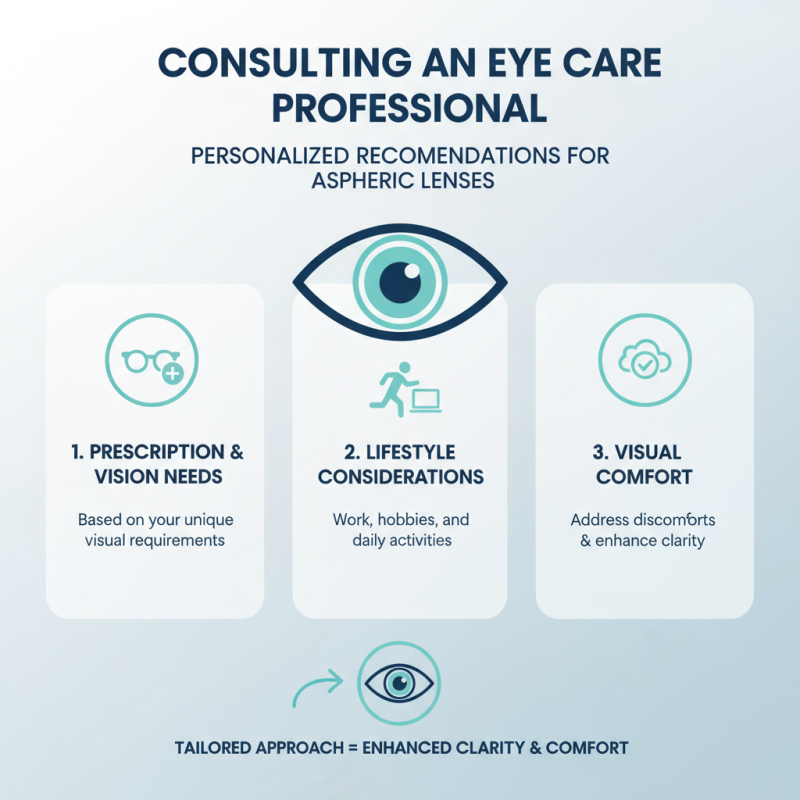
When selecting aspheric eyeglass lenses, seeking advice from an eye care professional is crucial. These experts provide personalized recommendations based on your specific vision needs. They consider your prescription, lifestyle, and any unique visual discomforts you may experience. This tailored approach ensures that your lenses will enhance clarity and comfort.
During your appointment, don't hesitate to discuss your daily activities. Do you spend hours on digital devices? Are you an avid reader or driver? Sharing these details allows the professional to suggest lenses that optimize your vision for those situations. It's essential to be honest about how your current lenses perform, too. Reflecting on any issues can lead to better outcomes.
Be open to trying different lens options. Not every solution works for everyone. Sometimes, what seems ideal might not feel right. Collaborating with your eye care provider can help navigate these challenges. They can assist in making adjustments, ensuring you achieve the best vision possible.