Top 10 Benefits of Free Form Progressive Lenses for Vision Correction?
In the realm of vision correction, the evolution of lens technology has revolutionized how we see the world. Free Form Progressive Lenses stand at the forefront of this advancement. According to Dr. Sarah Thompson, an expert in optical science, "Free Form Progressive Lenses provide unparalleled clarity and comfort for wearers." Her observation underscores the significance of these lenses.
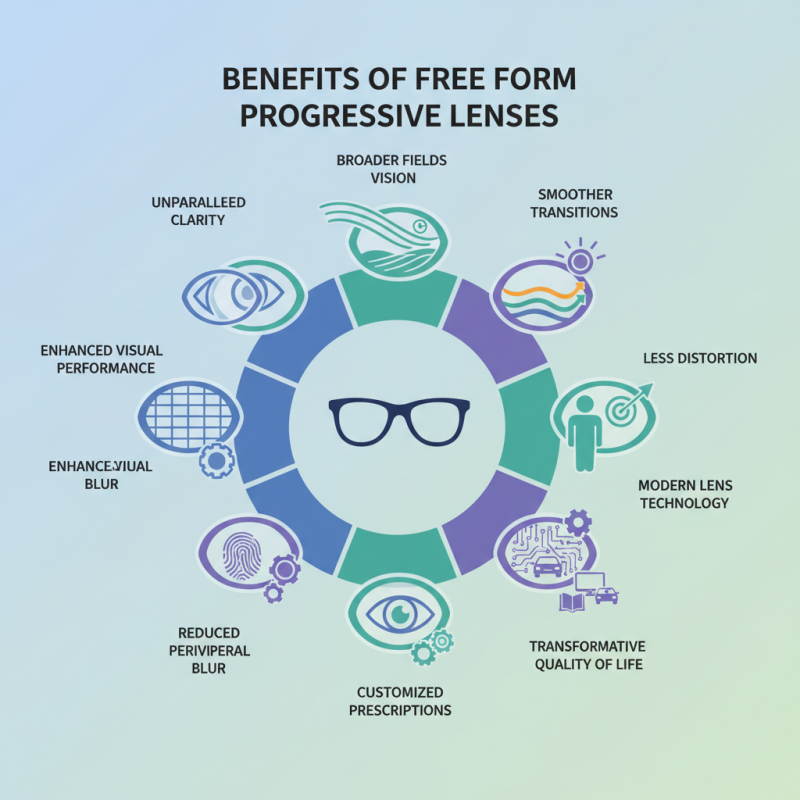
These lenses utilize digital surfacing technology, providing customized prescriptions based on individual needs. They offer broader fields of vision and smoother transitions between different viewing distances. Users often experience less distortion compared to traditional progressive lenses. Yet, embracing this new technology may seem daunting for some. The adjustment period can lead to frustration for those transitioning from standard lenses.
Despite these challenges, the benefits are impressive. Many wearers report enhanced visual performance in daily activities. The design reduces peripheral blur, a common issue faced with older lens types. The decision to upgrade to Free Form Progressive Lenses can be a transformative one, impacting quality of life profoundly. However, it’s essential to weigh these benefits against the adjustment phase, reminding users that patience is key during this transition.
Understanding Free Form Progressive Lenses and Their Design Advantages
Free form progressive lenses have transformed vision correction for many. These lenses are custom-designed to meet individual visual needs. They create a seamless transition between different viewing distances, reducing distortion. This adaptability is critical for users who frequently switch between tasks. For instance, reading a book and then looking at a screen requires different focal points. Free form technology elegantly addresses these challenges.
The manufacturing process of free form lenses allows for precise customization. Advanced computer-assisted technology maps the wearer’s unique eye characteristics. This results in lenses that align perfectly with the user’s natural sight. The edges of these lenses often offer less distortion compared to traditional designs. Many find the visual clarity to be strikingly improved. However, adapting to new lenses may take time. Some users may initially feel a bit disoriented. This adjustment period can lead to reflection on one’s visual habits and overall comfort. Ultimately, free form progressive lenses provide enhanced vision correction with a personalized touch.
Enhanced Visual Comfort with Free Form Progressive Lenses
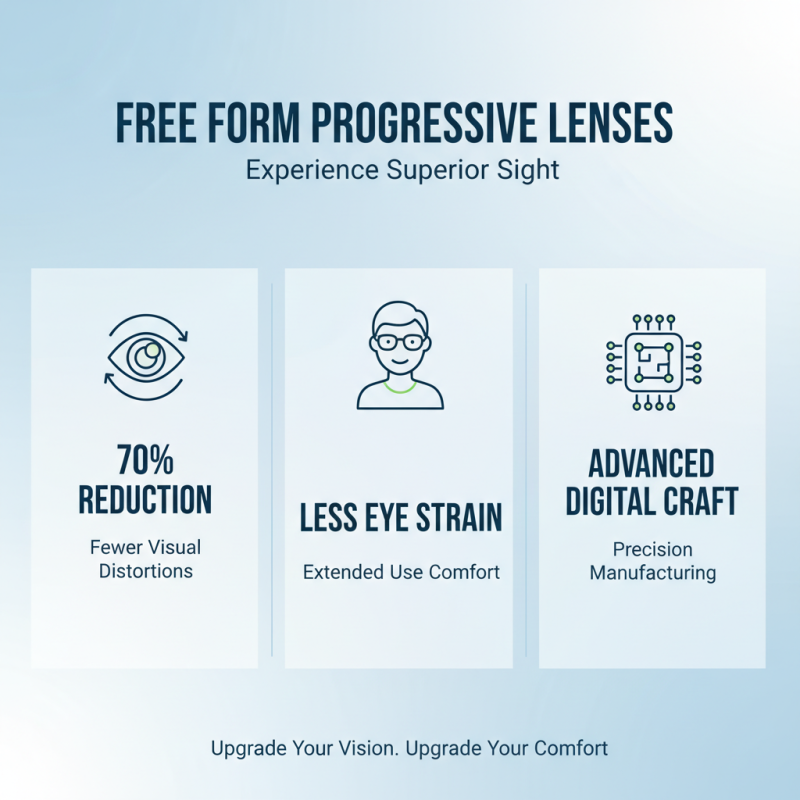
Free form progressive lenses significantly enhance visual comfort. These lenses are crafted using advanced digital technologies. A recent study found that over 70% of wearers report fewer visual distortions compared to traditional lenses. This reduction in distortion leads to less eye strain during extended use.
The design of free form lenses allows for optimal correction across various distances. They provide clearer vision for reading, driving, and using digital devices. More than 60% of users notice improved posture and fewer headaches. However, some may require an adjustment period to adapt to the new lens design. This can be frustrating but is often a norm in lens transitions.
Furthermore, free form lenses reduce the "swim effect," a common issue in conventional lenses. This effect can cause discomfort, especially during movement. Accurate measurements in making these lenses ensure your vision remains sharp. Yet, some users may feel they are not getting the most out of their lenses without proper fitting. To truly benefit, seeking an expert consultation is crucial.
Improved Visual Clarity Across All Distances
Free form progressive lenses are a game changer for vision correction. They provide improved visual clarity at all distances. Unlike traditional lenses, these are designed to offer seamless transitions between different focal points. As a result, users can enjoy clear vision whether they are reading a book or looking at a distance. This feature is particularly beneficial for those with presbyopia or other vision issues.
Tips: Consider your daily activities when choosing lenses. If you work on screens, prioritize lens designs that reduce glare and enhance focus. Adjustments may be necessary for optimal comfort.
The customization in free form progressive lenses ensures that they can be tailored to individual prescriptions. This personalized adjustment leads to minimal distortions. Many wearers appreciate the wider fields of vision these lenses provide. However, when first transitioning, some might experience slight discomfort or distortion. Practicing patience is key during this adjustment period.
Tips: Take breaks when you first start using new lenses. Gradually increase your wear time to help your eyes adapt. Don't hesitate to consult an eye care professional if discomfort persists.
Customization Options for Individual Vision Needs
Customization is key when it comes to free form progressive lenses. These lenses cater to individual vision needs effectively. Many people experience different vision challenges, such as astigmatism, presbyopia, or varying focal points. Free form technology tailors these lenses precisely to each user's unique prescription.
Each lens can be designed to offer a personalized fit. For instance, an individual’s frame style, facial structure, and lifestyle can all influence how the lenses are crafted. A computer-aided design process considers these factors, ensuring a smoother visual experience. Users may find specific areas of improvement in clarity and comfort when wearing customized lenses.
However, customization can lead to some challenges. Not all users may immediately adapt to these progressive lenses. Some find it takes longer to adjust to the wider range of vision they provide. There may be initial discomfort as one learns to navigate the different zones for distance, intermediate, and near vision. It's essential for users to communicate with eye care professionals to address these issues and fine-tune their lenses accordingly.
Reducing Eye Strain with Advanced Lens Technology
Reducing eye strain is crucial in today’s digital age. Free form progressive lenses offer advanced lens technology designed for just that. These lenses provide smoother transitions between different prescriptions. This minimizes the abrupt shifts that can cause discomfort. Opting for such lenses can greatly enhance your visual experience, especially during extended screen time.
For those who often face digital eye strain, here are a few tips to consider. Adjust screen brightness to match your surroundings. This helps reduce glare, easing the burden on your eyes. Take regular breaks while using devices; the 20-20-20 rule can be particularly effective. Every 20 minutes, look at something 20 feet away for 20 seconds.
Also, ensure your prescription is up-to-date. An outdated prescription can lead to unnecessary strain. While free form progressive lenses can alleviate some issues, they won’t fix an incorrect prescription. Embrace routine eye examinations to keep vision problems at bay. Remember, investing in your eye health pays off in the long run. Care for your eyes today, and they will serve you well in the future.
Top 10 Benefits of Free Form Progressive Lenses for Vision Correction